
Water encyclopedia
WATERMILL: AN ANCIENT TECHNOLOGY POWERED BY WATER
A traditional watermill consists of several components, including the doʻla, kosa, shaqildoq, millstone, hub, waterwheel, wooden parts and xomma.
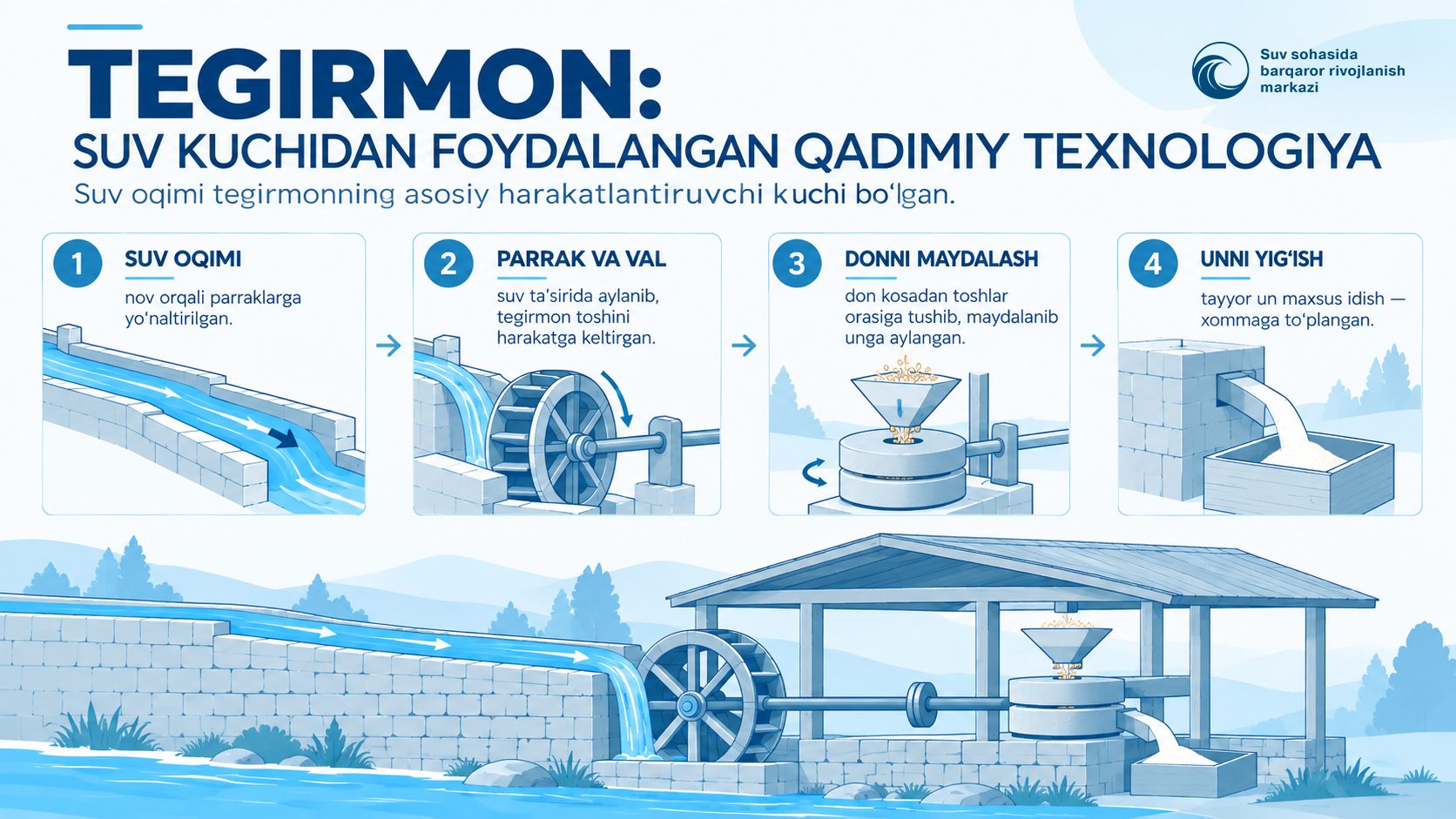
In ancient times, animal-powered mills and hand mills were also widely used in Central Asia. Watermills and windmills have survived in some areas to this day. Windmills were not traditionally used in the territory of Uzbekistan, while watermills were widely used to grind grain into flour.
How Did a Watermill Work?
In a watermill, flowing water serves as the main driving force. A traditional watermill consists of several components, including the doʻla, kosa, shaqildoq, millstone, hub, waterwheel, wooden parts and xomma.
Water flowing down a channel strikes the waterwheel, setting the millstone in motion. A wooden component in contact with the millstone causes the kosa to vibrate. As it vibrates, grain falls from the doʻla into a groove in the millstone. The rotating stone crushes the grain into flour, which is collected in the xomma. Once the flour container is full, the miller stops the mill and removes the flour.
In this way, a watermill converted the energy of flowing water into mechanical motion, reducing the amount of manual labour required. Today, examples of traditional watermills can still be found in some parts of Uzbekistan.
Source: National Encyclopaedia of Uzbekistan.
Published:
Related material
Water encyclopedia
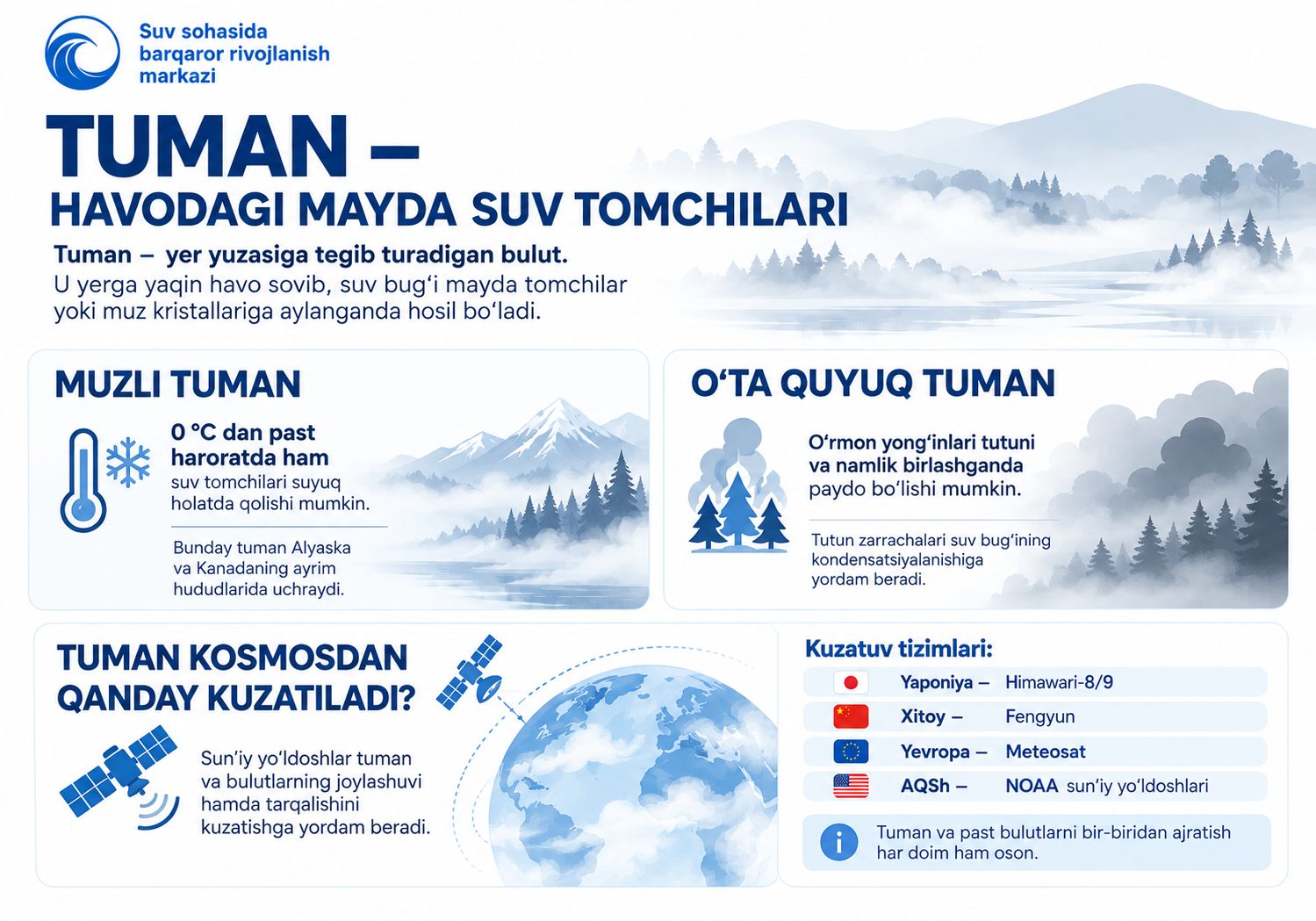
FOG – TINY WATER DROPLETS IN THE AIR
Fog forms when the air near the ground cools, causing water vapour to condense into tiny water droplets or ice crystals.
Water encyclopedia
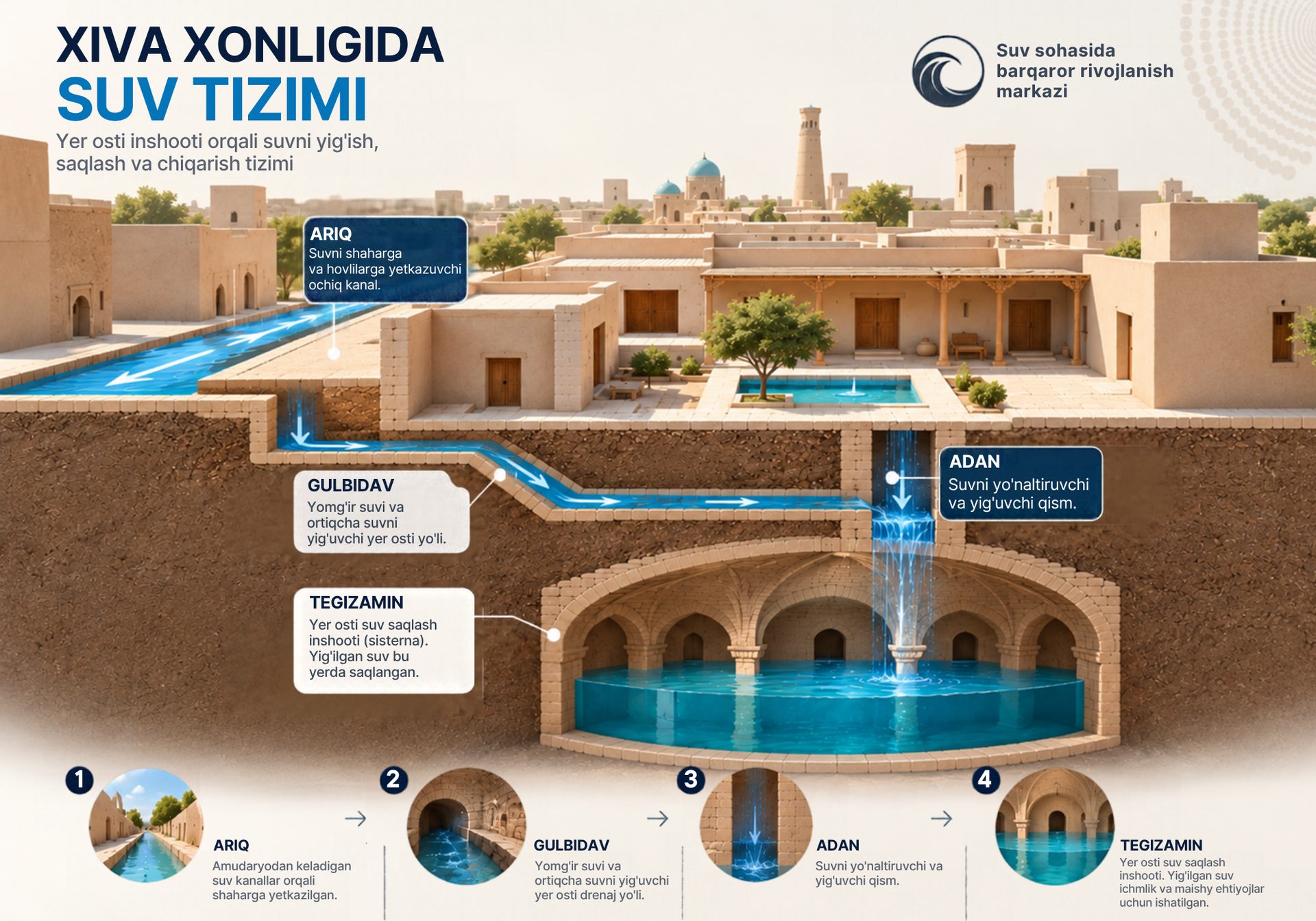
THE WATER INFRASTRUCTURE HIDDEN BENEATH KHIVA’S FAMOUS CITYSCAPE
Underground water conduits known as gulbidav, together with drainage elements such as adan, helped collect and channel rainwater and excess water.