
Water encyclopedia
FOG – TINY WATER DROPLETS IN THE AIR
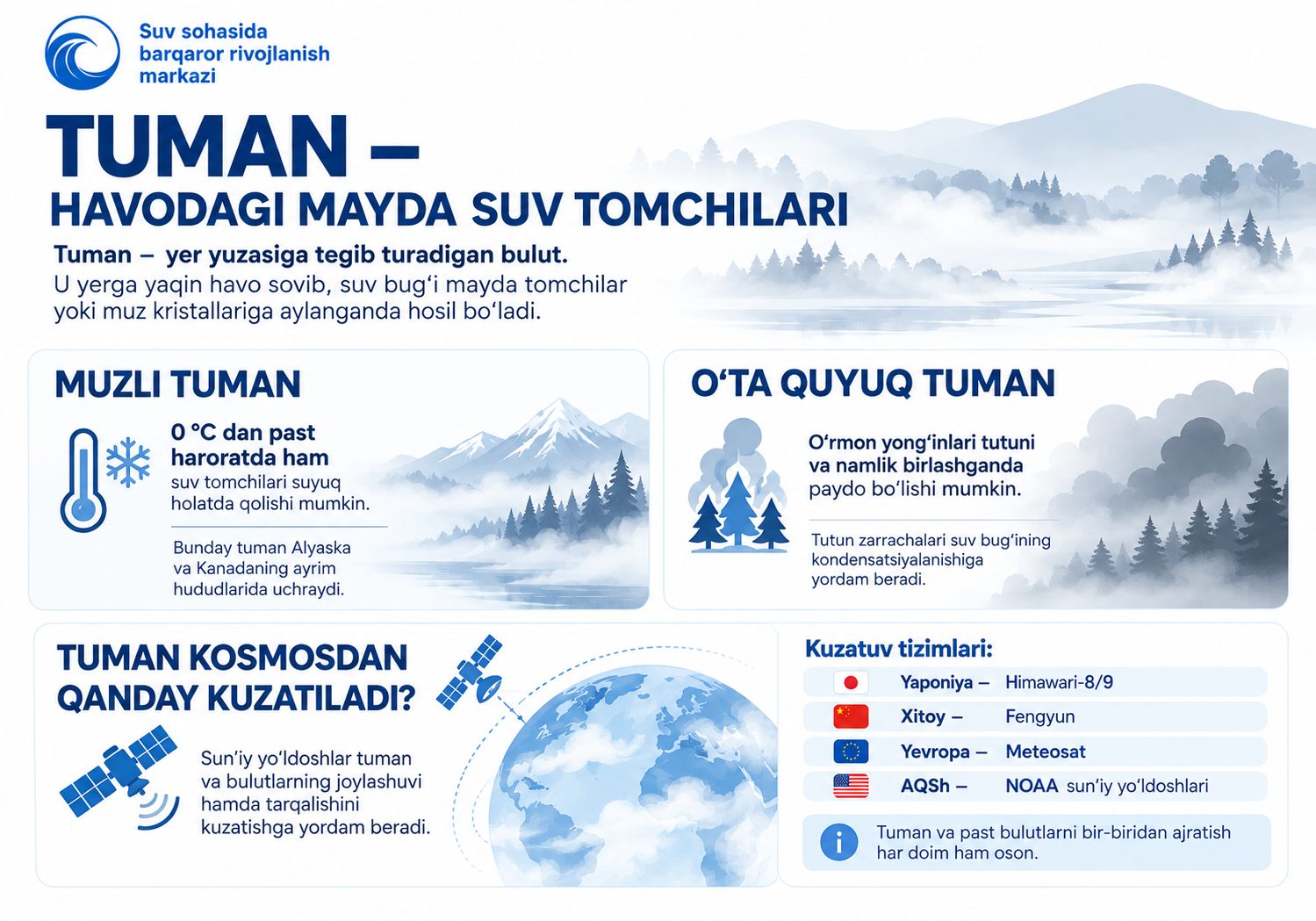
Fog forms when the air near the ground cools, causing water vapour to condense into tiny water droplets or ice crystals.
Fog forms when the air near the ground cools, causing water vapour to condense into tiny water droplets or ice crystals.
Clouds can form at various altitudes, reaching approximately 19 km above sea level, and even close to the Earth’s surface. Fog is essentially a cloud that touches the ground.
Freezing Fog
When the air is extremely cold, fog may contain ice crystals. This type of fog occurs in some parts of Alaska and Canada.
Sometimes, water droplets in the air remain liquid even at temperatures below 0°C. These supercooled droplets can freeze rapidly when they come into contact with cold road surfaces, forming a dangerous layer of ice.
Extremely Dense Fog
Extremely dense fog can significantly reduce visibility.
When smoke from forest fires combines with moisture, it can contribute to the formation of very dense fog. Smoke particles help water vapour condense into droplets. Such conditions can make driving hazardous.
How Is Fog Monitored from Space?
Meteorological satellites help monitor fog and clouds and identify their location and spread. Visible-light imagery is used during the day, while infrared data and specially designed colour-enhanced imagery are used at night.
Satellite Systems Used to Monitor Fog Around the World
Japan: Himawari-8/9
China: Fengyun
Europe: Meteosat
United States: NOAA meteorological satellites
These systems help monitor atmospheric phenomena and analyse weather conditions. However, distinguishing fog from low-level clouds in satellite imagery is not always easy.
Published:
Related material
Water encyclopedia
WATERMILL: AN ANCIENT TECHNOLOGY POWERED BY WATER
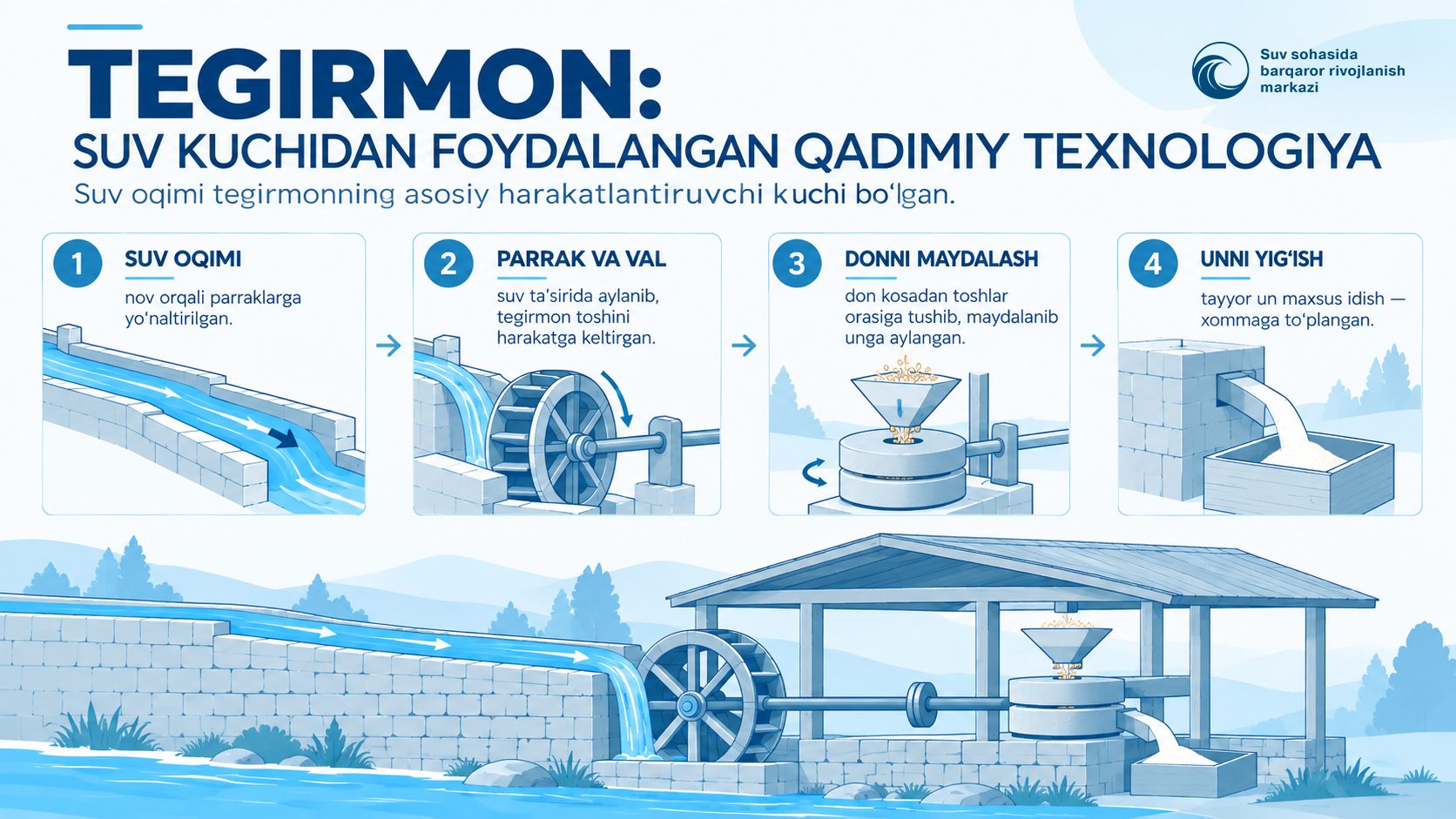
A traditional watermill consists of several components, including the doʻla, kosa, shaqildoq, millstone, hub, waterwheel, wooden parts and xomma.
Water encyclopedia
THE WATER INFRASTRUCTURE HIDDEN BENEATH KHIVA’S FAMOUS CITYSCAPE
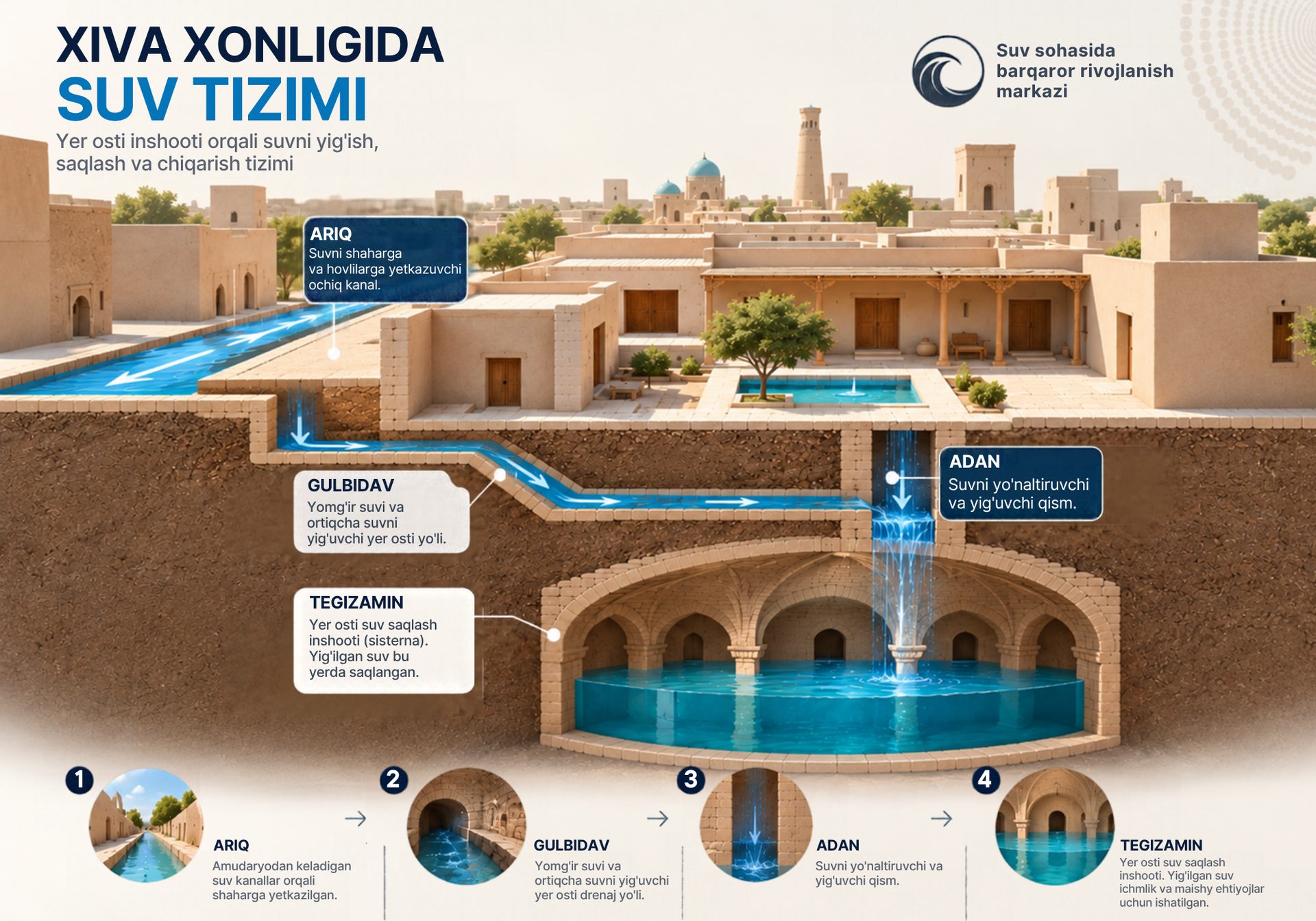
Underground water conduits known as gulbidav, together with drainage elements such as adan, helped collect and channel rainwater and excess water.