Project objectives
- to develop an Integrated Water Resources Management (IWRM) and water efficiency plan for the Zarafshan River Basin;
- to strengthen the legislative and regulatory framework for the water sector;
- to support the integration of water resources management issues into relevant cross-sectoral structures.
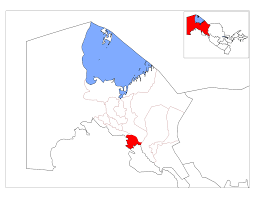
Project area: Samarkand and Navoi regions, Republic of Uzbekistan.
Total project value: USD 1,259,245.
Financing: grant funding from the United Nations Development Programme (UNDP).
Responsible implementing organization: Ministry of Agriculture and Water Resources of the Republic of Uzbekistan.
Implementation period: 2010–2013.
Project components
Component 1 — Improvement of the legal and institutional framework for IWRM in Uzbekistan.
Component 2 — Improvement of municipal water supply in the Zarafshan River Basin.
Component 3 — IWRM and Water Efficiency Plan for the Zarafshan River Basin.
Achieved results
Component 1. Improving the legal and institutional framework for IWRM
To support modernization of the water sector and facilitate a transition from supply-driven to demand-based water resources management, a draft Water Code of the Republic of Uzbekistan was developed.
Representatives of relevant ministries and government agencies participated in its preparation. The draft Water Code was submitted to the Government through the Ministry of Agriculture and Water Resources of the Republic of Uzbekistan for consideration and subsequent adoption.
Component 2. Improving municipal water supply
- a drinking water supply and sanitation strategy was developed to improve the living conditions of more than 5 million people in the Zarafshan River Basin;
- community capacity for social mobilization and participation in the establishment and management of clean drinking water systems was strengthened, including through the application of gender-sensitive approaches;
- rural water consumer associations were established in five settlements, where community mobilization models for improving rural and drinking water supply were tested;
- solar-powered equipment was installed to provide a sustainable drinking water supply to 4,950 residents of Shibzon mahalla in Navoi Region;
- improved sanitation facilities incorporating water-saving solutions were provided for more than 1,500 students and teachers at three schools in Samarkand Region;
- the performance of the Suvoqova utility in Karmana District was improved through a more effective drinking water metering and payment system.
Component 3. IWRM and Water Efficiency Plan for the Zarafshan River Basin
- eight sectoral strategic documents were developed covering improvements to irrigation and land reclamation systems, increased water productivity, institutional capacity building and improved information management. These measures addressed issues related to approximately 550,000 hectares of irrigated land;
- a strategy for improving water and energy efficiency in pumping systems was developed to reduce energy consumption in the water sector and lower greenhouse gas emissions;
- a strategy for improving industrial water-use efficiency was developed in response to economic growth and the development of a free economic zone in Navoi Region, with a focus on clean technologies and innovation in water use;
- an “IWRM and Water Efficiency Plan for the Zarafshan River Basin” was developed to provide an integrated approach to water resources management, taking into account the interests of water users and social, environmental and economic considerations.
The plan supported better coordination of cross-sectoral planning at the basin level, integration of technical interventions, and more informed strategic decision-making on investments in water infrastructure.
Key results
IWRM capacity building
More than 55 roundtables, seminars, field days and training courses were organized, involving over 1,473 water-sector professionals, farmers, dehkan farmers and representatives of rural households.
Pilot activities
- two new drinking water supply systems were constructed in Kanal-Yoka in Pastdargom District and Nurobod in Samarkand Region, providing clean drinking water to a total of 2,000 residents;
- an IWRM plan for Navoi Region was developed, creating a framework for cross-sectoral water-use planning with the participation of 26 specialists;
- an Integrated Information System was developed to enable online data exchange among water management organizations in Navoi Region, supported by the procurement of computer equipment and software;
- a new 3.7 km machine canal, four water distribution structures and eight hydrological monitoring posts were constructed, and a receiving basin was reconstructed;
- reconstruction of the pumping station’s irrigation infrastructure provided reliable irrigation water to 2,000 hectares of land belonging to 38 farms, as well as household plots of 401 households in Sayram, Mehnatkash, Zafarobod and Kanalek settlements;
- modernization of the Mehnatobod-3 water management infrastructure in Pastdargom District of Samarkand Region was completed.